
Blog
Where a Vertical Lift Module for Warehouse Delivers Fastest ROI
For warehouses under pressure to improve space use, picking speed, and labor efficiency, a vertical lift module for warehouse operations often delivers the fastest ROI. Whether you are comparing a vertical lift module supplier, reviewing vertical lift module price, or shortlisting a vertical lift module manufacturer alongside a vertical carousel supplier, vertical carousel price, and vertical carousel manufacturer, understanding the value drivers is the first step to a smarter investment.
For researchers, operators, engineers, buyers, commercial evaluators, and executives, the key question is not simply whether automated storage works. The better question is where it works best, how quickly it pays back, and which operating conditions make the return more visible in 12–24 months rather than 36 months or longer.
In warehouse automation, fast ROI usually comes from a combination of three measurable effects: recovering floor space, reducing labor travel, and cutting picking errors. A vertical lift module can compress storage vertically, support goods-to-person workflows, and improve inventory access control, making it a strong fit for high-mix, medium-volume environments.
This article explains the warehouse scenarios where a vertical lift module delivers the fastest financial return, what technical and commercial factors matter most, and how to compare it against alternatives such as vertical carousels. It also outlines practical selection criteria for distributors, end users, and procurement teams evaluating automation equipment.
Where ROI Shows Up First in Warehouse Operations
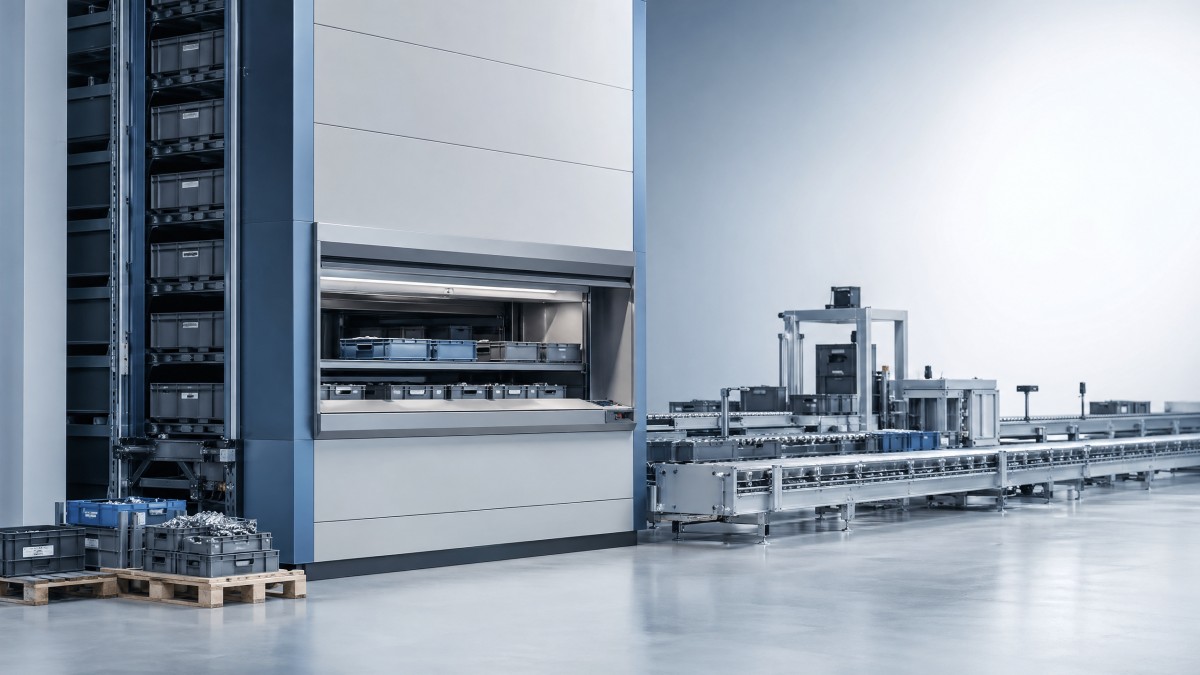
The fastest ROI usually appears in warehouses where labor spends too much time walking. If a picker travels 8–12 kilometers per shift, even a modest goods-to-person system can remove a large portion of non-value-added movement. In many parts storage operations, travel time accounts for 40%–60% of the total picking cycle, which means reducing it creates immediate labor efficiency.
Another high-return scenario is floor-space pressure. A vertical lift module commonly uses ceiling height from 3 meters up to 15 meters, depending on the building. By storing trays vertically, many facilities recover 60%–85% of the floor area used by shelving or bin racks. That reclaimed area may delay building expansion, free room for packing stations, or support new SKU growth without leasing extra space.
Fast ROI is also common in environments with high SKU counts but low to moderate order lines per SKU. This includes spare parts, MRO inventory, electronics components, medical supplies, tools, service kits, and e-commerce accessories. These operations often struggle with search time, stock inconsistency, and congestion in narrow aisles, all of which are easier to improve with structured automated storage.
Error reduction matters more than many buyers expect. If the wrong part creates a line stoppage, return, technician revisit, or customer complaint, the cost of one mistake can exceed the labor saved from dozens of picks. A vertical lift module paired with barcode verification, operator guidance, or WMS integration can lower mis-picks by a meaningful margin, especially when SKU similarity is high.
Typical conditions that accelerate payback
- Facilities with more than 2,000–5,000 active SKUs and frequent small-part picking.
- Buildings where clear height exceeds 4.5 meters but floor space is constrained.
- Operations running 1.5 to 3 shifts, where equipment utilization is high.
- Labor markets with rising wages, seasonal shortages, or high training turnover.
- Processes with compliance needs, lot control, or restricted-access inventory.
The table below compares common warehouse pain points and how quickly a vertical lift module can influence them. This helps technical evaluators and purchasing teams prioritize operational impact before discussing price.
The strongest early gains are usually operational, not theoretical. If a facility already has unused space, low labor cost, and minimal SKU complexity, the payback may be slower. But where travel, congestion, and parts accuracy are daily issues, the return often becomes visible faster than in many other automation projects.
Why Vertical Lift Modules Often Outperform Simpler Storage Upgrades
Not every warehouse problem requires automation. In some cases, slotting changes, labeling improvements, or basic shelving redesign can solve 10%–20% of the issue at low cost. However, these upgrades rarely change the structural limits of floor space and manual travel. A vertical lift module is different because it changes the storage geometry and the operator workflow at the same time.
Compared with static shelving, the main difference is controlled retrieval. The machine brings the tray to the operator at an ergonomic access point, often between waist and chest height. That reduces bending, reaching, ladder use, and repetitive strain. In operations with 500–2,000 picks per day, even small ergonomic gains can influence productivity, absenteeism, and training consistency.
Compared with a vertical carousel, the lift module often has an advantage when SKU dimensions vary widely. Tray-based storage allows more flexible height management and better handling of mixed item profiles. A carousel can still be effective in certain high-speed or standardized-item applications, but when inventory changes seasonally or product dimensions vary, lift modules often give planners more slotting freedom.
For commercial reviewers comparing suppliers, it is important to look beyond equipment price. A lower purchase cost can be offset by lower tray density, slower retrieval, weak software integration, or limited local service support. The value is in total operating effect over 5–10 years, not just the initial quote.
Comparison points buyers should review
The next table summarizes practical differences between static shelving, vertical carousels, and vertical lift modules. It is not meant to declare one system universally better, but to show where ROI logic changes by application.
In some projects, teams also review reference materials or generic product pages such as 无 during early sourcing. That can be useful for broad market comparison, but final decisions should still depend on tray capacity, software compatibility, service coverage, and local installation requirements.
A note on price versus return
A vertical lift module price review should include more than equipment and freight. Buyers should also estimate installation downtime, electrical work, fire protection adaptation, WMS or ERP integration, operator training, and annual service. In many cases, labor savings and space recovery outweigh these extras, but only when they are modeled honestly.
- Use a 3-year and 5-year payback view, not only a first-year cash view.
- Model labor with actual fully burdened cost, not base wage alone.
- Include avoided costs such as mezzanine expansion, extra racking, or leased overflow space.
- Assign a realistic value to error reduction if wrong picks affect production or returns.
Technical Selection Criteria That Influence ROI Speed
The fastest ROI does not come from buying the most advanced machine. It comes from matching machine configuration to inventory behavior. A module that is oversized, underutilized, or poorly slotted can extend payback by 12 months or more. That is why technical evaluation should start with SKU profile data rather than brochure features.
At minimum, assess item dimensions, unit weight, daily line volume, order frequency, and access rules. For example, small electronics and spare parts may prioritize tray density and pick guidance, while industrial tools may prioritize tray load capacity and reinforced tray construction. Facilities with 8,000 SKUs do not need all items in the machine; often the best ROI comes from placing the top 20%–40% of active lines into automated storage first.
Ceiling height and footprint also matter. If the building has only 3.2 meters of usable height, the space advantage will be smaller than in a 7-meter or 10-meter environment. Similarly, throughput targets determine whether one access opening is enough or whether dual-bay configurations, batching, or adjacent pick stations are required.
Software capability is often underestimated. Standalone control can work for basic inventory, but integration with ERP, WMS, scanners, light indication, or batch picking logic usually improves real ROI. The reason is simple: the machine stores items, but software governs how efficiently those items are identified, sequenced, and replenished.
Core specifications to confirm before purchase
- Tray payload range, such as 200 kg, 300 kg, or 500 kg per tray, depending on inventory type.
- Usable machine height versus building clearance, including lighting, sprinklers, and HVAC obstacles.
- Retrieval speed and average cycle time under actual rather than ideal load conditions.
- Inventory location accuracy, barcode support, and operator confirmation methods.
- Integration options with ERP, WMS, PLC, or external pick-to-light systems.
- Service response expectations, spare parts availability, and preventive maintenance intervals.
The following table can help a cross-functional team align technical selection with commercial goals. It is especially useful when procurement, engineering, and warehouse operations need a common scoring framework.
A strong vertical lift module supplier should be able to review SKU data, define tray mix, estimate cycle assumptions, and explain service expectations without oversimplifying. If the supplier cannot translate your item profile into a realistic operating model, ROI claims should be treated carefully.
Implementation, Risk Control, and Common Buying Mistakes
A vertical lift module project usually moves through 5 practical stages: data review, layout confirmation, commercial proposal, installation planning, and operational ramp-up. Depending on complexity, lead time may range from 6–16 weeks for a straightforward project, while software integration or building modifications can extend the timeline further.
One common mistake is trying to automate the wrong inventory first. Slow-moving, oversized, or awkwardly packaged items may not belong in the first module. The best starting point is often the SKU group that combines frequent access, moderate unit size, and operational importance. This creates visible improvement quickly and makes user adoption easier.
Another mistake is underplanning replenishment. If picking becomes faster but refill logic stays manual and unstructured, stockouts and tray imbalance can appear. Replenishment windows, cycle counting rules, and user permissions should be defined before go-live. Even a simple daily or twice-per-shift replenishment plan can protect performance.
Training is also part of ROI. Most operators can learn basic machine use quickly, often within 1–2 days, but supervisors, maintenance staff, and inventory controllers need deeper process familiarity. Teams that treat the module as only a machine, rather than as a new workflow, often capture less value than expected.
Risk checklist before final approval
- Confirm floor loading, power supply, and fire safety requirements before ordering.
- Validate actual SKU dimensions instead of relying on outdated master data.
- Decide whether the module will support picking only, or picking plus buffer and replenishment.
- Define downtime response targets, such as same day, next business day, or 48-hour support.
- Plan for spare parts, preventive maintenance, and user escalation procedures.
FAQ for buyers and technical teams
Below are four practical questions that often appear during sourcing and internal approval.
How quickly can a warehouse usually see measurable benefits?
Labor and space benefits may be visible within the first 30–90 days after stabilization, especially if the machine replaces manual shelving in a high-travel pick zone. Full financial payback often depends on utilization, shift pattern, and labor rates, but many projects are assessed on a 12–36 month horizon.
Is a vertical lift module better than a vertical carousel in every case?
No. A vertical carousel can perform well when items are more uniform and retrieval patterns are repetitive. A lift module is often preferred when SKU heights vary, inventory changes often, or future flexibility matters more. The decision should depend on item profile, throughput, and space constraints rather than trend alone.
What should procurement focus on besides vertical lift module price?
Procurement should review total cost of ownership, local service capability, software integration scope, installation readiness, and expected uptime support. A lower quote can become expensive if response time is slow or if the system requires manual workarounds after installation.
Can distributors and resellers benefit from understanding these ROI drivers?
Yes. Distributors, agents, and integrators that understand warehouse ROI logic can qualify leads better, recommend the right storage technology, and reduce failed proposals. In many markets, sales success depends less on quoting equipment and more on diagnosing the operational bottleneck correctly.
How Decision Makers Should Build the Business Case
Executives and business evaluators usually need a business case that links operational gains to financial results. The most effective model combines hard savings and avoided future costs. Hard savings may include reduced labor hours, lower picking error costs, and less dependence on temporary labor. Avoided costs may include delayed building expansion, less shelving investment, or fewer production interruptions caused by missing parts.
A practical business case should use at least 4 categories: labor, space, accuracy, and scalability. Labor is often the largest line item, but space can be equally important in urban or high-rent locations. Scalability is relevant when SKU count is growing 10%–20% annually and the current warehouse cannot keep pace without redesign.
Decision makers should also ask whether the project fits a larger automation roadmap. A single vertical lift module can be a stand-alone improvement, but it can also serve as a first step toward broader warehouse digitization, including connected inventory control, slotting discipline, and standardized picking methods.
When comparing vendors, request a transparent assumption sheet. That means not only the capital cost, but also throughput assumptions, expected tray count, usable storage volume, service model, and integration scope. A vertical lift module manufacturer that can explain these points clearly is usually easier to work with during implementation and support.
Business case inputs worth collecting
- Current picks per day, average lines per order, and walking time per picker.
- Floor area occupied by the target inventory and the cost or value of that space.
- Error rate, return handling cost, and any production disruption cost linked to wrong parts.
- Annual labor turnover, training hours, and peak-season staffing difficulty.
- Expected SKU growth over the next 2–3 years.
Where a vertical lift module for warehouse use delivers the fastest ROI is rarely a mystery once the numbers are organized. The strongest cases are usually high-mix operations with limited space, frequent small-part picking, and expensive labor travel. If you are comparing a vertical lift module supplier, reviewing vertical carousel alternatives, or building an investment case for management, start with real SKU and workflow data rather than headline price alone.
A well-matched system can improve storage density, picking speed, ergonomics, and inventory control in one project. To move from evaluation to action, consult your technical and commercial teams, validate the operating assumptions, and request a tailored proposal. Contact us today to discuss your warehouse layout, get a customized solution, and explore the right automation path for your application.
Contact us