
Blog
What Sets One Vertical Lift Module Manufacturer Apart in Service
Choosing the right vertical lift module manufacturer is about more than equipment specs—it is about service, speed, and long-term support. Whether you are comparing a vertical carousel supplier, evaluating vertical lift module price, or sourcing a vertical lift module for warehouse use, the real difference often lies in installation, training, maintenance, and responsiveness. This article explores what separates a reliable vertical lift module supplier from the rest.
For researchers, operators, technical evaluators, buyers, and business decision-makers, service quality directly affects uptime, inventory accuracy, labor efficiency, and total cost of ownership. In automated storage systems, a delay of 24–48 hours for troubleshooting can impact order flow, spare parts access, and internal production schedules.
That is why comparing vertical lift module manufacturers should include not only tray load, ceiling height, software options, and throughput, but also commissioning capability, response times, preventive maintenance plans, and training depth. A machine may look similar on paper, yet support performance over the next 5–10 years can vary significantly.
Service Starts Before Delivery: Engineering, Planning, and Application Fit
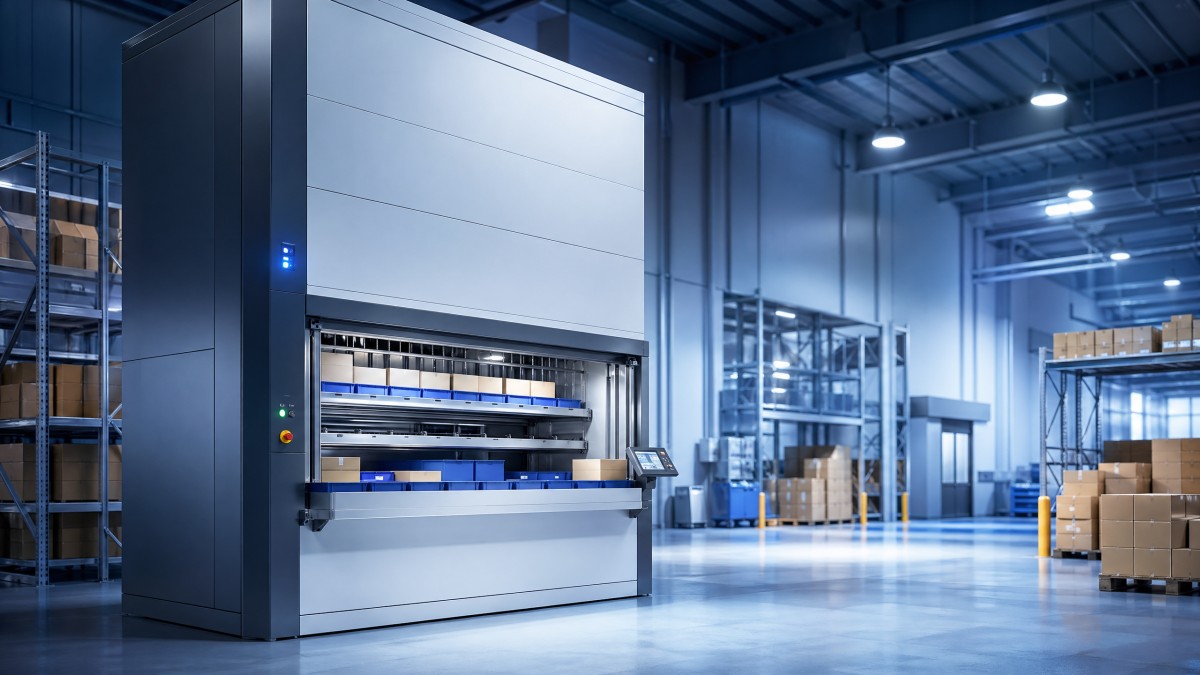
A strong vertical lift module manufacturer distinguishes itself early, long before installation day. The first difference is application engineering. Instead of only quoting dimensions and vertical lift module price, reliable suppliers review SKU size ranges, pick frequency, tray weight distribution, operator ergonomics, and future expansion needs.
In warehouse automation, poor pre-sales planning often leads to avoidable issues: underused tray height, bottlenecks at access openings, or software integration gaps. A qualified team should ask about at least 6 core variables: available ceiling height, floor load, daily picks, item dimensions, ERP/WMS connectivity, and shift pattern.
For technical evaluation teams, this stage is also where service discipline becomes visible. Does the manufacturer provide layout drawings within 3–7 working days? Can they identify whether a vertical lift module for warehouse use should be configured for spare parts, tools, MRO items, or small-parts fulfillment? These details reduce risk later.
What a pre-sales service review should include
- Site survey covering ceiling clearance, aisle width, slab condition, and electrical supply.
- Storage analysis by SKU count, item height profile, and tray load ranges such as 100–500 kg per tray.
- Throughput estimate by picks per hour, operator count, and replenishment cycles.
- Software scope defining standalone, barcode-based, or WMS/ERP-linked operation.
- Safety review addressing guarding, emergency stops, user access levels, and training needs.
Some buyers also ask for sample ROI modeling. While every site differs, a sound manufacturer should be able to explain where gains usually come from: 60%–85% floor space reduction, fewer walking steps, more consistent picking, and lower search time. They should also explain limitations instead of promising universal savings.
Comparison points in the planning phase
The table below shows how service capability can differ between a basic equipment seller and a true automation partner during the planning stage.
The key takeaway is simple: if a vertical lift module supplier asks better questions, the delivered system usually fits better. That reduces rework, shortens commissioning time, and helps procurement compare proposals on more than upfront cost alone.
Installation and Training Define Early Success
Even well-designed automation can underperform if installation and training are weak. A dependable vertical lift module manufacturer should provide a structured implementation plan with clear milestones, usually covering 4 phases: pre-install coordination, delivery and assembly, commissioning, and operator handover.
For many facilities, installation time ranges from 2–5 days for a straightforward setup, while more complex projects with software integration or multi-unit linking may take 1–3 weeks. Service quality shows in how the manufacturer manages dependencies such as power readiness, network access, floor marking, and safety acceptance.
Training is equally important. Operators need more than a quick demonstration. In practice, training should cover standard operation, tray handling, exception management, alarm response, daily cleaning, and user-level checks. For supervisors or maintenance staff, a second layer of training is often needed for diagnostics, backups, and escalation procedures.
Signs of a serious commissioning program
- Pre-install checklist issued 7–14 days before arrival.
- Documented SAT or site acceptance criteria, not verbal approval only.
- Operator training records for 2–3 user groups, such as operators, supervisors, and maintenance staff.
- Basic spare parts and alarm reference list delivered at handover.
- Post-startup follow-up within the first 30 days.
This is also where some companies request additional product information or accessory options. If such information is being reviewed, it should be documented clearly and linked consistently, for example: 无. The key is to keep optional scope separate from the base commissioning deliverables so the project stays controlled.
Common installation risks and how service teams prevent them
A skilled team usually prevents three recurring problems: inaccurate room measurements, delayed utilities, and insufficient user preparation. When these issues are addressed before delivery, early uptime improves and internal acceptance tends to be smoother.
For procurement and business evaluators, this stage is worth measuring. Ask how many technicians are assigned, whether remote support is available during startup, and whether training materials are delivered in digital format. These practical details often matter more than small differences in initial vertical lift module price.
After-Sales Support Is Where Manufacturers Truly Separate Themselves
Once the system is in daily use, after-sales support becomes the clearest differentiator. A vertical lift module for warehouse use is expected to run consistently across 1, 2, or even 3 shifts. When downtime happens, the real question is not whether faults ever occur, but how fast the supplier responds and how effectively the issue is resolved.
A mature service model usually combines hotline support, remote diagnosis, preventive maintenance, and spare parts planning. Response time targets vary by contract, but buyers commonly compare first-response windows such as 2 hours, 4 hours, or next business day. Resolution speed depends on remote access capability, technician coverage, and parts availability.
Preventive maintenance is not just a contract item; it protects throughput and component life. Depending on operating intensity, service visits may be scheduled every 6 months or every 12 months. Sites with heavy daily cycles, high tray loads, or dust-sensitive inventory often benefit from more frequent checks.
Service elements buyers should compare
The table below helps decision-makers compare after-sales service factors that influence long-term operating cost and uptime.
The strongest manufacturers also provide service transparency. They can explain what is covered under warranty, what is considered wear-and-tear, and which consumables or user actions affect support scope. This reduces disputes and helps distributors, agents, and end users plan realistic maintenance budgets.
Why responsiveness influences total cost
A lower purchase price can lose its advantage if service delays interrupt operations several times per year. For a site picking hundreds of order lines per day, even one unplanned stoppage can create backlog, overtime, and manual handling workarounds. That is why many experienced buyers weigh support quality alongside equipment specification.
How to Evaluate a Vertical Lift Module Supplier Across Technical and Commercial Criteria
A balanced evaluation framework helps technical teams and procurement avoid one-sided decisions. The best approach is to score both machine capability and service capability. In many projects, buyers use 5 major categories: system fit, software compatibility, service network, commercial terms, and lifecycle risk.
Technical evaluators often focus on tray payload, machine height, opening configuration, and control interface. Procurement may focus more on vertical lift module price, delivery lead time, warranty duration, and spare parts cost. Senior decision-makers usually want clarity on business continuity, vendor accountability, and scalability over 3–7 years.
A useful method is to rank suppliers not by the cheapest offer, but by weighted value. For example, some companies assign 30% to technical fit, 25% to service support, 20% to commercial terms, 15% to software integration, and 10% to implementation confidence. The exact ratio can vary, but structured scoring improves internal alignment.
Recommended decision checklist
- Confirm whether the supplier can support your region with local or regional technicians.
- Review standard lead times, often 6–12 weeks for standard projects and longer for customized integration.
- Check whether operator, supervisor, and maintenance training are included or separately quoted.
- Ask for a preventive maintenance sample scope and spare parts recommendation list.
- Clarify software ownership, update policy, and data interface responsibility.
- Review acceptance criteria, warranty start point, and escalation path for service incidents.
Some buyers may also encounter supplemental product references in proposal discussions, such as 无. If so, these references should support the main evaluation rather than distract from application fit, service readiness, or implementation control.
Common buying mistakes
Three mistakes appear frequently in automated storage purchases. First, overvaluing nominal capacity without analyzing actual SKU height mix. Second, ignoring operator training and change management. Third, treating service as a post-purchase issue instead of a selection criterion. Avoiding these mistakes usually leads to a smoother launch and more stable long-term performance.
For distributors and channel partners, supplier consistency is especially important. Strong manufacturer support makes it easier to handle customer expectations, accelerate quoting accuracy, and reduce disputes around startup or warranty cases.
FAQ: Practical Questions Buyers and Users Often Ask
The following questions reflect common search intent from warehouse users, engineers, purchasing teams, and business managers comparing automated storage vendors.
How do I know if a vertical lift module is suitable for my warehouse?
It is usually suitable when you need higher storage density, controlled item access, and faster picking for small to medium-sized parts. A good fit often includes ceiling height of at least several meters, SKU variety that benefits from organized tray storage, and a workflow where reducing walking time improves output.
What should I ask about maintenance before I buy?
Ask about maintenance interval, first-response target, warranty exclusions, critical spare parts lead time, and remote support capability. Also ask who performs service in your region and whether preventive maintenance reports include actionable findings rather than only a basic checklist.
Is the lowest vertical lift module price usually the best option?
Not necessarily. Lower initial pricing can be offset by slower support, extra commissioning charges, limited software scope, or longer parts lead times. Comparing total lifecycle value over 5 years is generally more useful than comparing base purchase price alone.
How long does user training usually take?
Basic operator training may be completed in several hours for simple workflows, while broader training for supervisors and maintenance staff can extend to 1–2 days depending on software, alarm handling, and reporting requirements. Multi-shift sites often need repeated sessions to cover all users.
What separates a reliable supplier from a basic equipment seller?
The difference is usually visible in engineering discipline, commissioning control, documentation quality, service response, and long-term accountability. Reliable suppliers help you plan, implement, train, maintain, and improve the system rather than only deliver the machine.
In automated storage equipment, the best vertical lift module manufacturer is rarely defined by hardware alone. Real differentiation comes from planning quality, installation discipline, training depth, maintenance support, and response speed when operations depend on uptime.
If you are comparing a vertical carousel supplier, reviewing vertical lift module price, or selecting a vertical lift module for warehouse use, evaluate the full service model with the same rigor you apply to technical specifications. That approach gives operators better usability, buyers better cost control, and decision-makers lower lifecycle risk.
To move forward with confidence, request a site-based assessment, compare service commitments in writing, and ask for a practical implementation outline. Contact us now to discuss your application, get a tailored solution, and learn more about the right automated storage strategy for your facility.
Contact us