
Blog
What Changes the Vertical Carousel Price More Than Expected?
When buyers compare vertical carousel price, they often start with machine height, tray count, or basic storage capacity. That is understandable, but it is rarely enough. In real projects, the biggest price changes usually come from factors that are less visible at first glance: payload requirements, tray configuration, software integration, safety compliance, installation conditions, and the level of supplier support after delivery. If you are reviewing options from a vertical carousel supplier, comparing a vertical carousel manufacturer, or benchmarking vertical lift module price from a vertical lift module supplier, the smartest approach is to look beyond the base quote and identify what truly affects total cost and long-term value.
Why the Base Vertical Carousel Price Often Does Not Reflect the Final Project Cost
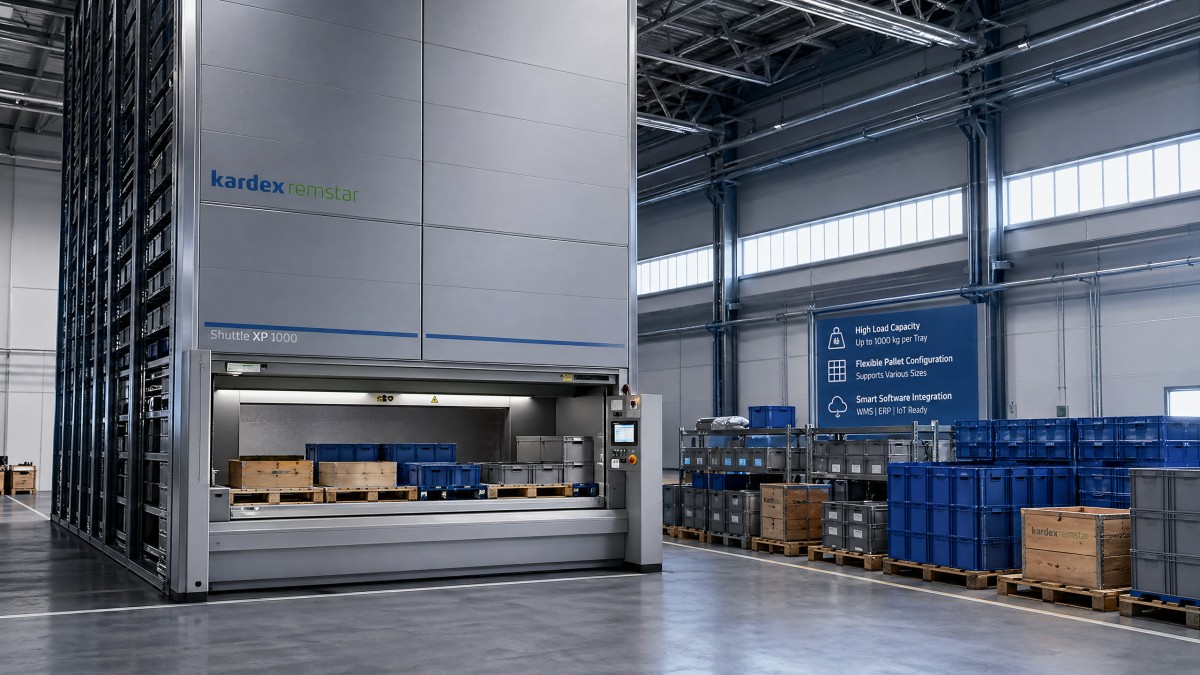
The core search intent behind this topic is practical: buyers want to know why one quote is much higher than another, and which price differences are justified. For most target readers, the real concern is not just “What is the machine price?” but “What exactly am I paying for, what will raise the cost later, and how can I judge whether the quote matches my use case?”
In automation equipment, a standard entry-level configuration may look competitive, but the final cost can move significantly once the application details become clear. A vertical storage system used for light parts picking in a clean, controlled environment is very different from one intended for heavy industrial components, multi-user operation, ERP integration, or stricter safety standards. That is why price comparison without specification alignment can be misleading.
What Changes Vertical Carousel Price More Than Buyers Expect?
1. Load capacity and tray strength
This is one of the most common hidden drivers. A system designed for light cartons is not priced like one that must handle dense metal parts, tools, or molds. Higher load capacity affects structural design, drive systems, motors, chains, tray materials, and long-term reliability requirements. Even if two machines look similar externally, the internal engineering can be very different.
2. Storage density and tray configuration
More trays do not simply mean “more storage.” They can also require different spacing logic, stronger support components, and more advanced control settings. Adjustable tray heights, special dividers, bins, and partition systems all add cost but may improve picking efficiency and space utilization. Buyers should assess cost per usable storage location, not just overall machine size.
3. Throughput requirements
If your operation needs faster picking cycles, multi-shift usage, or frequent retrievals, the equipment may need upgraded controls, drives, sensors, and interface design. A machine built for occasional access can be priced very differently from one expected to support high daily throughput in a busy warehouse or production environment.
4. Software and system integration
Software is often underestimated during budgeting. A standalone machine with simple controls costs less than a system integrated with warehouse management software, ERP platforms, barcode workflows, user permissions, inventory tracking, or pick guidance technologies. When buyers compare vertical lift module price, software capability is often a major reason for pricing gaps.
5. Safety options and compliance requirements
Safety is not just a checklist item. Depending on region, industry, and operating environment, you may need light curtains, enclosed access zones, emergency controls, fire-related protection features, anti-static measures, seismic design considerations, or enhanced guarding. These options can change the final quotation more than expected, especially in regulated sectors.
6. Installation site conditions
Ceiling height, floor flatness, load-bearing limits, available power supply, access constraints, and whether the unit must be moved into an existing building all influence project cost. In some cases, site preparation and installation complexity can add more cost than a buyer initially planned for. This is especially true when retrofitting an older facility.
7. Customization level
Standard models are usually more price-efficient. Once the project requires custom tray sizes, special openings, unique machine heights, environmental protection, or application-specific controls, cost rises quickly. Customization is not necessarily bad, but it should be justified by workflow gains, safety needs, or storage constraints.
Which Price Differences Are Worth Paying For?
Not every higher quote is overpriced. In many cases, the better question is whether the additional cost creates measurable value. This is especially important for procurement teams, technical evaluators, and business decision-makers.
Price differences are often worth paying for when they deliver one or more of the following:
- Higher uptime and lower maintenance risk
- Better operator safety and easier compliance
- Improved picking speed and labor efficiency
- More accurate inventory control
- Better use of vertical space in expensive facilities
- Easier integration with current digital workflows
- Stronger local service and parts availability
If a quote is higher because it includes more durable components, stronger after-sales support, and software that reduces manual errors, that higher initial vertical carousel price may lead to lower total operating cost over time.
How to Compare Quotes from a Vertical Carousel Supplier or Manufacturer Fairly
One of the biggest problems in the market is that buyers compare quotations that are not based on the same technical assumptions. To make a fair comparison, ask each vertical carousel supplier or vertical carousel manufacturer to define the following clearly:
- Maximum total load and load per tray
- Usable tray dimensions and number of trays included
- Picking speed or cycle performance expectations
- Included software functions and integration scope
- Safety devices included in the base quote
- Installation, commissioning, and training scope
- Warranty terms and response time for service
- Spare parts support and lifecycle commitment
It is also helpful to request a breakdown between equipment price, software price, installation price, and optional features. That makes it easier to see whether one supplier is truly more expensive or simply more transparent.
In some sourcing discussions, buyers may come across reference listings such as 无. Even when product details are limited, the same evaluation logic applies: do not compare on headline price alone; compare on specification match, service scope, and lifecycle fit.
What Target Readers Usually Care About Most
For information researchers: understand the main cost drivers and avoid assuming that all vertical systems are equivalent.
For operators and users: focus on ease of use, safety, access speed, and daily reliability.
For technical evaluators: verify mechanical design, payload, controls, system compatibility, and maintenance requirements.
For procurement teams: compare total scope, not just machine price, and identify hidden add-ons early.
For business evaluators and decision-makers: look at return on investment, labor savings, floor-space reduction, error reduction, and service risk.
For distributors and agents: assess supplier consistency, product positioning, support responsiveness, and local market fit.
For end consumers or smaller buyers: prioritize practical usability and support access over specification complexity.
How to Avoid Overpaying Without Choosing the Wrong System
The goal is not to buy the cheapest model. The goal is to buy the right specification for the real application. A practical decision process includes:
- Define the actual items to be stored, including weight, dimensions, and access frequency.
- Clarify throughput expectations and how many users will access the system.
- List integration needs before requesting quotations.
- Confirm local safety and site requirements early.
- Ask suppliers to separate standard features from optional extras.
- Estimate maintenance, downtime risk, and support availability.
- Evaluate the total business impact, not only acquisition cost.
Another useful step is asking each vertical lift module supplier what assumptions are built into the quote. That often reveals why one vertical lift module for warehouse use appears cheaper at first but ends up costing more after options, installation, and support are added.
Final Takeaway: The Biggest Price Changes Usually Come from Specification Gaps, Not Random Markups
If you want a clear answer to what changes vertical carousel price more than expected, it is this: the final number usually shifts because the real application requires more than the buyer first assumed. Load capacity, software, safety, customization, installation complexity, and after-sales support are the most common reasons.
A smart buying decision comes from matching the equipment to operational reality. Instead of asking only for the lowest vertical carousel price, ask which configuration best fits your storage profile, workflow, compliance needs, and long-term cost goals. That is the approach that helps buyers compare offers with confidence and avoid expensive surprises later.
Contact us