
Blog
How to Compare a Vertical Carousel Supplier Beyond Lead Time
When evaluating a vertical carousel supplier, lead time is only one part of the decision. Buyers comparing vertical carousel price, service support, system reliability, and long-term value should also review each vertical carousel manufacturer and vertical lift module supplier in depth. Whether you need a vertical lift module for warehouse operations or want to compare vertical lift module price across vendors, a broader assessment helps procurement teams, engineers, and decision-makers choose the right vertical lift module manufacturer with confidence.
What should you compare first when lead time looks similar?
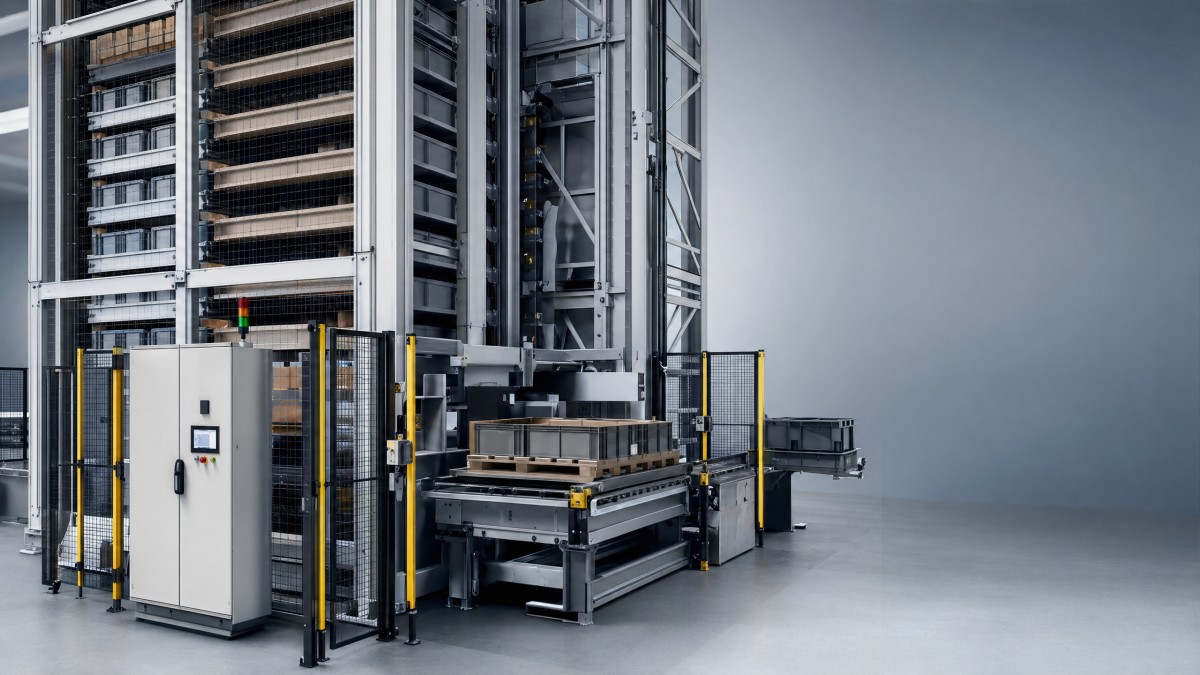
In automated equipment projects, two suppliers may both promise delivery in 8–12 weeks, yet the actual project outcome can differ sharply. A vertical carousel system is not only a machine shipment; it includes design review, electrical integration, operator safety, software logic, spare parts planning, and after-sales response. If buyers focus only on the calendar, they may overlook the cost of downtime over the next 5–10 years.
For information researchers and technical evaluators, the first comparison should be scope clarity. Ask whether the quotation includes controls, trays or carriers, sensors, light curtains if required, commissioning support, manuals, and training. A short lead time with missing items often becomes a longer real implementation cycle after change orders, rework, or delayed site preparation.
For procurement and commercial reviewers, the next checkpoint is risk distribution. Does the vertical lift module supplier define responsibilities for shipping, installation, power interface, network connection, and acceptance? A vendor that states 4 implementation stages clearly is often easier to manage than a vendor offering a fast promise but a vague project boundary.
Core dimensions that matter before price comparison
A practical supplier review usually starts with 5 core dimensions: equipment fit, system reliability, lifecycle cost, service capability, and integration readiness. These factors affect warehouse productivity, operator adoption, and internal approval speed. They also help distributors and agents judge whether a manufacturer is suitable for long-term channel cooperation instead of one-off sales.
- Equipment fit: tray size, payload range, ceiling height use, throughput expectation, and SKU profile must match the actual operation rather than brochure assumptions.
- Reliability: drive system, control architecture, fault diagnostics, and maintenance access should support daily operation in single-shift or multi-shift environments.
- Lifecycle cost: compare not only vertical carousel price, but also energy use, spare parts availability, training needs, and typical maintenance intervals such as monthly inspection or quarterly preventive service.
- Service capability: review response time, remote support options, commissioning resources, and whether local or regional technicians are available.
- Integration readiness: check compatibility with WMS, ERP, barcode devices, pick-to-light tools, and access control requirements.
Some buyers also request reference documents such as sample FAT checklists, maintenance lists, or operator training outlines. If a supplier can explain these materials in a structured way, the evaluation becomes less dependent on sales claims and more grounded in execution capability.
How to compare vertical carousel suppliers with a practical scorecard
A scorecard helps technical teams, users, and executives review suppliers on the same basis. It is especially useful when 3–5 vendors appear similar in brochure specifications. The goal is not to find the cheapest quote in isolation, but to identify the supplier with the best operational fit and manageable project risk.
The table below shows a balanced evaluation framework for automated storage equipment. Weighting can be adjusted by project type. For example, pharmaceutical or electronics environments may raise compliance and traceability weight, while e-commerce operations may prioritize throughput, software interface, and service response during peak periods.
This type of scorecard prevents common comparison errors. A supplier with a lower initial vertical lift module price may score poorly in service and integration, which can increase the real project burden after installation. A slightly higher quote may be easier to approve if it reduces implementation uncertainty and future interruption risk.
Questions procurement teams should ask suppliers
Strong supplier comparisons depend on precise questions. Generic requests such as “send your best price” rarely produce useful decision data. A better approach is to request structured responses covering 6 key checkpoints, so every vendor answers the same commercial and technical topics.
- What payload per carrier or tray is supported, and under what distribution conditions?
- Which safety functions are standard, and which require optional configuration based on local practice?
- What is included in commissioning, and how many days are typically reserved on site?
- What spare parts are recommended for the first 12 months of operation?
- Can the system connect with barcode scanners, ERP, or WMS through standard interfaces?
- Which acceptance criteria apply before handover, and who signs them?
If product information is being reviewed during early research, some teams also log links centrally for later comparison, such as 无. Even when product data is incomplete, preserving a standard review trail helps internal stakeholders compare options consistently across suppliers.
Which technical and service details reveal long-term supplier value?
In automated equipment, long-term value usually appears in design discipline and service structure rather than in marketing language. A vertical carousel manufacturer should be able to explain duty cycle assumptions, inspection points, fault recovery logic, and operator access rules. These details matter because real warehouse performance depends on continuous use, not only on day-one installation.
Technical signals that deserve closer review
Buyers should verify whether system specifications reflect a real application range. Typical projects evaluate clear height, floor conditions, usable tray dimensions, and load profile rather than just total machine height. If one supplier quotes attractive capacity but does not define usable storage density or retrieval workflow, comparison becomes misleading.
Look beyond top-line specifications
Ask how the machine performs under mixed SKU conditions, shift changes, and partial load variations. In many facilities, retrieval performance differs between low-volume and medium-volume picking profiles. A system optimized for static storage may not be ideal for frequent order preparation. Operators and warehouse supervisors should therefore test workflow logic, not just machine dimensions.
Service details are equally revealing. A dependable vertical lift module manufacturer should define whether support begins with remote diagnosis, phone guidance, spare part dispatch, or site intervention. Common service structures include 3 response layers: remote troubleshooting, component replacement guidance, and field technician escalation. That process often matters more than a headline promise about fast supply.
Training is another overlooked factor. Good suppliers provide operator training, maintenance orientation, and basic fault handling guidance at handover. In practice, 2–3 training groups may be needed: operators, maintenance staff, and supervisors. Without that structure, even a well-designed system can suffer from misuse, avoidable alarms, or unsafe picking habits.
Documentation quality should also be checked. Ask for sample manuals, preventive maintenance schedules, and recommended inspection frequency. A monthly checklist and a quarterly review plan are common operational tools. They support internal maintenance teams and help procurement justify lifecycle value during approval discussions.
How do vertical carousel price and total cost really differ?
Comparing vertical carousel price without defining scope often leads to poor purchasing decisions. Initial equipment price may cover the machine body, but software modules, installation supervision, interface work, and operator training can sit outside the base quote. That is why total cost should be reviewed over at least a 3–5 year operating horizon.
The next table gives a structured way to compare visible and hidden cost items. It is especially useful for business reviewers who need to explain why two vertical lift module supplier offers differ even when both appear to meet the same storage objective.
This comparison shows why a low vertical lift module price is not automatically a lower-cost solution. If installation support is minimal and spare parts planning is unclear, the buyer may absorb extra internal labor, delayed startup, or emergency service costs later. Cost clarity is usually more valuable than nominal price simplicity.
When should you also compare alternatives?
A vertical carousel system is not the only answer in automated storage. Some sites should also compare a vertical lift module, shelving with pick assistance, or compact rack systems. The right choice depends on SKU shape, pick frequency, floor space pressure, and required inventory control depth. Comparing alternatives helps avoid buying the wrong automation type for the right problem.
- Choose a vertical carousel when stored items are relatively regular and the operation benefits from dense vertical storage with controlled access.
- Compare a vertical lift module when product size variability is wider and flexible tray height optimization is important.
- Review semi-automated shelving when budget is limited and throughput demand does not justify a full automated storage unit.
This is also the stage where channel partners and resellers assess market fit. If the supplier can explain where the system is strong and where another solution may be more appropriate, that usually indicates deeper application knowledge and a more reliable commercial relationship.
What procurement, compliance, and implementation risks are commonly missed?
Many buying teams do a good job comparing quotations but a weaker job reviewing implementation conditions. In automated equipment projects, delays often come from site readiness, unclear interface ownership, or incomplete acceptance criteria. These issues can turn an expected 10-week equipment plan into a much longer operational rollout.
Common risks before order confirmation
Start with physical constraints. Ceiling height, floor levelness, access route, and power supply must be verified before production release. A mismatch discovered after fabrication can trigger redesign, shipping delay, or site modification. Buyers should therefore use a 5-point pre-order checklist covering dimensions, utilities, data connection, safety zoning, and acceptance responsibility.
Compliance should also be treated carefully. Requirements vary by region and application, but buyers commonly ask suppliers about electrical safety, machine guarding, emergency stop logic, manuals, and labeling. It is reasonable to request documentation aligned with general machine safety practice, but not reasonable to assume every option is included as standard without written confirmation.
Implementation steps that reduce delay risk
A stable project usually follows 4 steps: requirement confirmation, drawing and interface review, manufacturing and pre-dispatch check, then installation and acceptance. Each step should have named owners and dated deliverables. This is especially important when procurement, engineering, warehouse users, and IT all influence approval or readiness.
- Confirm use case: define SKU range, picking frequency, operator count, and whether single-shift or multi-shift operation is expected.
- Review interfaces: verify power, data, software handshake, access control, and any barcode or printer connection requirements.
- Prepare acceptance: agree on test scope, alarm handling, training completion, and document handover before shipment or before site start.
- Plan support: define who handles the first 30 days of operation, spare parts readiness, and escalation contacts for early-stage issues.
Another common mistake is approving equipment without operator involvement. Users and supervisors often reveal workflow issues earlier than procurement teams. Their feedback on access height, picking posture, replenishment routine, and screen logic can significantly improve final supplier selection.
FAQ and final supplier decision guidance
Before final approval, many teams still have practical questions about vertical carousel manufacturer selection, vertical lift module supplier comparison, and project timing. The answers below focus on common buying scenarios and can help align research, engineering, and purchasing teams around a realistic decision path.
How many suppliers should be compared?
For most projects, comparing 3 suppliers is enough to establish a sound commercial and technical baseline. If the application is unusual, highly regulated, or integrated with broader automation, a 4th option may be useful. More than that can slow decision-making unless the requirements are still unclear.
What is a reasonable lead time to expect?
Lead time depends on configuration depth, software scope, and site readiness. Standardized equipment may fit within 6–10 weeks in some cases, while customized projects with interface work may require 10–16 weeks or more. Buyers should separate manufacturing lead time from the total project timeline, which includes approval, shipping, installation, and handover.
What matters most for technical evaluators?
Technical evaluators should focus on load suitability, control architecture, safety logic, integration path, diagnostics, and maintenance accessibility. A machine that looks equivalent on paper may differ significantly in how faults are identified and resolved. Those details affect uptime, support burden, and internal maintenance confidence.
How can buyers avoid selecting only on price?
Use a weighted evaluation sheet, include users and engineering in review, and compare 12-month to 36-month ownership factors rather than only the initial quote. If one supplier has a better-defined implementation plan, clearer spare parts policy, and stronger integration guidance, that may justify a higher initial investment.
Why choose us for your supplier comparison process?
We support buyers with structured comparison guidance for automated equipment projects, including parameter confirmation, solution matching, delivery scope review, and commercial clarification. If you are comparing a vertical carousel manufacturer or reviewing vertical lift module price and support conditions, we can help you sort the real differences behind similar-looking quotations.
You can contact us to discuss 6 specific topics: storage capacity planning, site dimension review, software or interface expectations, delivery timeline breakdown, spare parts and service planning, and quotation scope alignment. If you are still in the research stage, we can also help organize supplier questions and application data so your next comparison round is faster and more accurate.
Contact us