
Blog
Vertical Lift Module Supplier Claims That Need a Closer Look
Choosing a vertical lift module supplier or vertical carousel supplier is not just about promises or the lowest vertical lift module price. Buyers, engineers, and decision-makers also need to verify performance, service, safety, and long-term value. In this article, we take a closer look at common claims from every vertical lift module manufacturer and vertical carousel manufacturer to help you evaluate options with more confidence.
What buyers should verify before trusting supplier claims
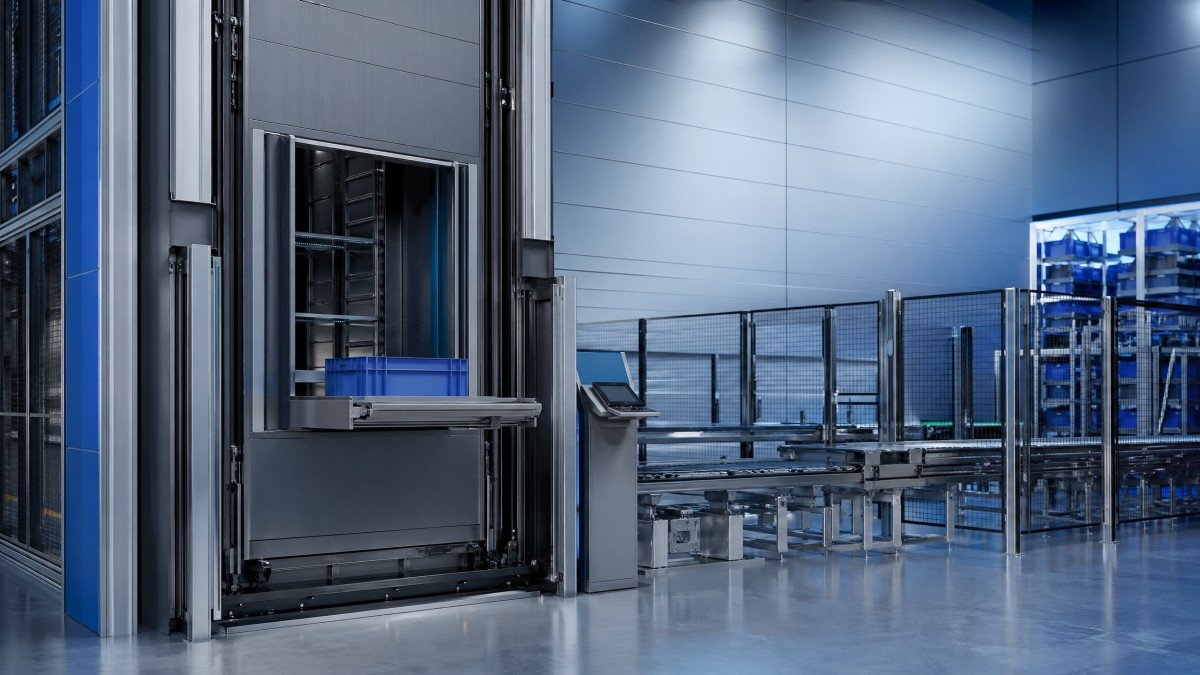
If you are comparing automated storage systems, the real question is not whether a supplier can make impressive claims. It is whether those claims hold up in your facility, with your workload, your operators, and your budget. For most research-oriented buyers, technical evaluators, procurement teams, and business decision-makers, the core search intent behind this topic is clear: how to separate marketing language from measurable performance.
A strong vertical lift module supplier should be able to prove value in five areas: actual storage density, throughput under normal operating conditions, safety compliance, service responsiveness, and total cost over the system life. A capable vertical carousel supplier should be judged by the same standard. If a claim sounds attractive but cannot be backed by test data, site references, maintenance details, or operating assumptions, it deserves a closer look.
“We maximize storage space” — ask how that is calculated
Nearly every vertical lift module manufacturer says their system increases storage capacity. In many cases, that is true. But the percentage improvement often depends on assumptions that may not match your operation.
Ask the supplier to explain:
- What baseline was used for the comparison: static shelving, pallet racking, or an already optimized storage area?
- Whether the claimed space savings include access aisles, maintenance clearance, and operator space
- How tray height optimization works in real use, not only in software simulations
- Whether load dimensions, SKU variability, and future inventory growth were considered
For example, a system may show excellent cube utilization in a controlled layout, but actual gains can be lower if your inventory mix changes often or includes irregular items. Storage density matters, but usable density matters more. A well-qualified supplier will discuss both.
“Our system improves picking speed” — request real throughput conditions
Throughput claims are often presented as a headline number, but picking speed depends on much more than machine movement. It also depends on software logic, tray presentation time, SKU organization, operator training, batch size, and integration with upstream or downstream processes.
When evaluating a vertical lift module supplier, ask for:
- Lines picked per hour under customer operating conditions
- Single-order versus batch-picking performance
- Peak throughput compared with sustained throughput
- The effect of barcode scanning, weighing, confirmation steps, or ERP/WMS integration
- Performance data for similar industries or SKU profiles
If a supplier only shares best-case theoretical cycle times, that is not enough for investment planning. End users and technical teams need practical output estimates based on real workflows.
“Our machine is safe” — confirm standards, access design, and operator reality
Safety should never be accepted as a generic promise. A responsible vertical carousel manufacturer or vertical lift module manufacturer should clearly state which standards the equipment follows and how safety features work in daily operation.
Look closely at:
- Emergency stop placement and accessibility
- Operator opening protection and sensors
- Load control, tray weight monitoring, and imbalance detection
- Fire protection compatibility and site-specific requirements
- Lockout/tagout procedures for maintenance
- User permissions and software-level access control
Also ask about human factors. Can operators work comfortably at the access opening? Are there design features that reduce reaching, bending, or repetitive strain? A system can be compliant on paper and still create avoidable operational risk if ergonomics are poor.
“Maintenance is simple” — find out who supports the system after installation
Long-term support is one of the most underestimated parts of supplier evaluation. A low acquisition cost can quickly lose its appeal if spare parts take weeks to arrive or if local service is limited.
Ask direct questions such as:
- Do you have local technicians or only remote support?
- What are your standard response times and uptime commitments?
- Which spare parts are stocked locally?
- How often is preventive maintenance required?
- Can our maintenance team be trained for first-line support?
- What software update and cybersecurity support is included?
This is also where procurement and business evaluators should pay attention to total lifecycle dependence. If one supplier controls all service access, software tools, and replacement components, you should understand the long-term commercial implications before signing.
“Our price is competitive” — compare total cost, not just equipment price
The lowest vertical lift module price is rarely the full story. Decision-makers should compare total cost of ownership across at least five categories:
- Equipment purchase
- Installation and commissioning
- Software, integration, and licenses
- Maintenance, spare parts, and downtime risk
- Energy use, labor savings, and space cost reduction
Some systems cost more initially but deliver better uptime, faster retrieval, stronger software, or lower support risk. Others appear affordable until optional safety features, interface development, or post-warranty service are added.
A simple ROI model should include labor hours saved, floor space released, inventory accuracy improvements, picking error reduction, and the financial impact of downtime. If needed, document related sourcing notes through 无 as part of your evaluation workflow.
“Our software is advanced” — test usability and integration depth
Software claims can be vague. “Smart,” “intelligent,” and “Industry 4.0 ready” do not tell you whether the system fits your environment.
Technical evaluators and operators should verify:
- Whether the system works as standalone software or integrates with your ERP/WMS/MES
- How inventory locations, user permissions, and audit trails are handled
- Whether replenishment, batch picking, and reporting are configurable
- How easy it is to train new users
- What happens if the network fails or the host system is offline
Ask for a live demonstration using a workflow similar to yours. A polished interface means little if common tasks require too many steps or if integration costs become unexpectedly high.
“We serve many industries” — prioritize relevant references over broad claims
Suppliers often position themselves as universal solutions providers. That may be true at a high level, but what matters more is whether they understand your application. A pharmaceutical operation, an electronics distributor, a maintenance parts room, and an industrial manufacturer all have different priorities.
Request references that match your needs in terms of:
- Item size and handling characteristics
- Order frequency and picking profile
- Traceability and compliance requirements
- Shift patterns and uptime expectations
- Integration complexity
Relevant references are much more valuable than a long generic customer list. If the supplier can show measurable results from similar environments, their claims carry more weight.
A practical checklist for comparing suppliers with confidence
To make evaluation easier, use a structured comparison process. Ask each vertical lift module supplier or vertical carousel supplier to provide the same categories of evidence:
- Space-saving assumptions and layout basis
- Real throughput data under defined operating conditions
- Safety standards, features, and ergonomic considerations
- Service network coverage and spare-parts strategy
- Total cost of ownership and ROI assumptions
- Software capabilities and integration scope
- Application-specific customer references
This helps procurement teams avoid subjective comparisons and gives management a clearer basis for approval. In some sourcing discussions, you may also encounter supplemental product material such as 无, but the same rule applies: verify specifics before treating any claim as a decision factor.
Final takeaway: the best supplier is the one that can prove fit, not just make promises
When reviewing claims from any vertical lift module manufacturer or vertical carousel manufacturer, the most useful mindset is simple: trust evidence, not headlines. Strong suppliers do not avoid detailed questions. They welcome them. They can explain assumptions, share reference cases, define support terms, and help you understand both limitations and advantages.
For buyers, operators, engineers, and decision-makers, the real value lies in matching the system to your operating reality. The right solution is not always the cheapest, the fastest on paper, or the most heavily marketed. It is the one that delivers measurable performance, manageable risk, and sustainable value over time.
Contact us