
Blog
Warehouse consolidation - the process of consolidating all warehouses into a centralized warehouse.
We will share all the information you need to know about this process, including how to implement it and key advantages. In addition, we will share how our automated storage solutions and warehouse management systems can help further simplify your warehouse operations.
What is warehouse consolidation?
Warehouse consolidation, also known as inventory consolidation, is the process of merging goods in a centralized logistics facility or integrated warehouse.
Warehouse consolidation can reduce transportation costs, minimize transportation costs from point A to point B, and reduce the number of shipments.
The process of warehouse integration
So, how is warehouse integration carried out?
The warehouse operator consolidates multiple individual orders from different suppliers and ships them together. Usually, warehouse employees group goods from suppliers or other centers, which come from the same supplier or other warehouse but have the same shipping location, and place them in the same area for sorting and shipping.
Once the order is weighed, packaged, and classified for shipment, it can be shipped.
Starting from the integrated warehouse, the goods are loaded onto trucks and transported to the same destination. In some cases, the merged goods need to go through regional distribution before being delivered to customers.
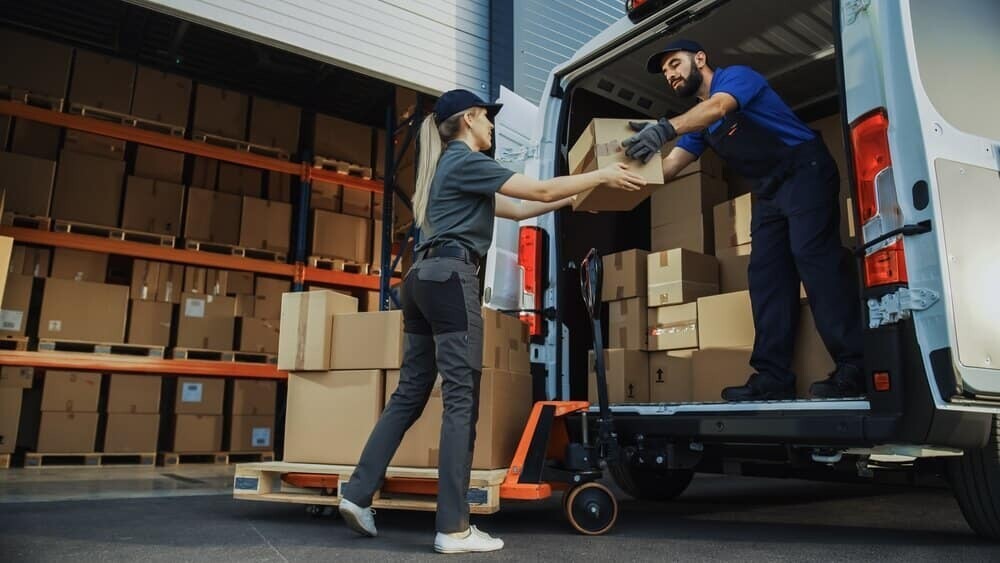
Warehouse or inventory consolidation, the process of consolidating transportation in a centralized location to reduce transportation costs and increase expenses
The benefits of warehouse integration
From minimizing transportation costs to optimizing warehouse space, the following are the main benefits of warehouse integration.
1. Reduce transportation costs
According to the 30th Annual Logistics Status Report of the Supply Chain Management Professional Committee, in 2018 alone, the estimated expenditure of US companies on transportation and logistics services was $1.64 trillion, a significant increase of 11.4% compared to 2017.
The growth of transportation services is driven by several factors, including the labor shortage of truck drivers and supply chain configuration to adapt to the growing demand for e-commerce.
Instead of transporting multiple individual goods to the same destination, inventory consolidation allows you to combine goods into a single truck for transportation, thereby reducing transportation costs.
2. Reduce fuel emissions
A recent study found that 13% of the total greenhouse gas emissions from e-commerce in 2020 came from transportation, ranking third on the list.
Due to the inventory consolidation process, independent category goods from different suppliers are loaded into the same truck, resulting in a reduction in trucks used for cargo transportation and a decrease in fuel emissions.
3. Minimize transportation costs to the greatest extent possible
The primary reason why customers gave up shopping in 2020 was due to expensive transportation costs.
In addition to the content value, packaging weight, and size of the product, the transportation point and origin also play an important role in calculating transportation costs.
Inventory consolidation enables you to reduce transportation costs by sharing trucks with other suppliers, providing more affordable shipping options for your customers.
4. Improve customer satisfaction
Inventory consolidation gives you greater flexibility in transportation costs. Adapt to customers' demand for affordable transportation and comprehensively improve customer satisfaction.
5. Save storage space
When utilizing warehouse integration services from 3PL suppliers, you can save warehouse space by reducing inventory.
But what if you want all your inventory to be stored in a centralized warehouse? At this point, automation comes in handy.
At Modula, we take the benefits of space optimization to a whole new level by redefining your warehouse space with our vertical cube containers and horizontal swivel containers.
Our high-density storage solution occupies the smallest area and utilizes every inch of available space in your warehouse. Thousands of different units of goods can be stored, picked, packaged, and transported with high efficiency, optimizing labor and reducing operating costs.
6. Improve employee productivity
Another benefit of warehouse integration is to increase employee productivity. Let's take a look at how to do it.
A study found that a cluttered environment can affect a person's attention and ability to process information.
In another study by the National Institute of Mental Health, researchers found that cluttered areas can affect brain performance and responsiveness.
Employees are more likely to make mistakes when working in disorderly or cluttered spaces. Inventory consolidation can eliminate clutter and improve productivity.
Contact us