
Blog
Vertical Lift Module for Warehouse: Best Fit or Costly Mismatch?
Is a vertical lift module for warehouse the smart path to space savings and faster picking, or a costly mismatch for your operation? Whether you are comparing a vertical lift module supplier, reviewing vertical lift module price, or evaluating a vertical lift module manufacturer against any vertical carousel supplier, manufacturer, or price option, this guide will help you assess fit, risks, and return before making a decision.
When does a vertical lift module for warehouse make operational sense?
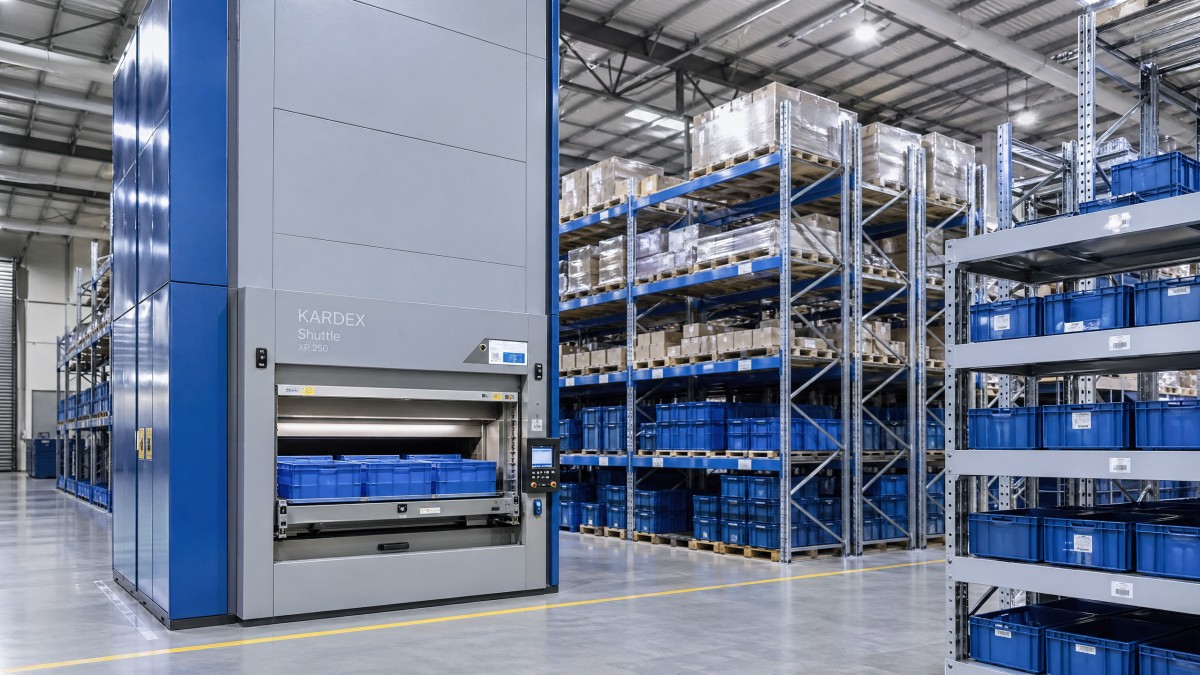
A vertical lift module for warehouse is an automated storage system that stores trays in a tall enclosed structure and delivers requested items to an ergonomic access opening. In automation equipment projects, the main appeal is usually clear: recover floor space, improve picking discipline, and reduce walking time. Yet those benefits appear only when storage profile, order frequency, SKU behavior, and operator flow align with the machine’s real working range.
For many warehouses, the right question is not whether vertical storage is advanced, but whether it matches the operation’s demand pattern. If your site manages medium-to-high SKU counts, frequent small-part picking, and limited floor area, a vertical lift module for warehouse can fit well. If your operation depends on oversized goods, chaotic inbound staging, or very high simultaneous picks across many operators, the same investment may create a bottleneck rather than remove one.
A practical first screening often starts with 4 indicators: ceiling height, SKU dimensions, daily pick lines, and replenishment rhythm. In many projects, clear height above 3.5 m begins to open useful vertical storage value, while facilities with 6 m–12 m clear height often see the strongest space-recovery potential. Even then, tray payload, item cube, and access frequency matter more than headline height alone.
Decision makers should also separate goals into 3 layers: space savings, labor productivity, and inventory control. A system chosen only for floor-space compression can disappoint if software integration, bin discipline, and slotting logic are weak. Operators care about access ease and reduced bending. Engineers care about cycle time and uptime. Procurement teams care about lifecycle cost, service support, and delivery risk. The best-fit solution addresses all 3 layers together.
Typical fit signals before you request quotations
Before comparing any vertical lift module supplier, create a simple internal profile of your storage and picking behavior. This step prevents vendors from sizing around ideal conditions that do not reflect your warehouse reality. A 2-week data sample is often enough to identify whether picks are concentrated in a small fast-moving set or spread across thousands of low-frequency SKUs.
- Your inventory contains small to medium items with stable packaging, rather than long, fragile, or irregular goods that waste tray volume.
- Order profiles involve frequent piece picking, kitting, MRO supply, spare parts, tools, electronics, healthcare supplies, or e-commerce accessories.
- You need to improve operator ergonomics by reducing ladder use, long walking paths, and repetitive reaching across static shelving.
- Inventory accuracy and controlled access matter, especially where traceability, restricted parts, or controlled issue points are important.
If those signals are weak, another solution may be better. For example, carton flow, shelving with pick-to-light, mini-load AS/RS, or a vertical carousel may outperform a vertical lift module for warehouse in some throughput-heavy environments. A neutral evaluation is always better than forcing a premium solution into the wrong process.
Which warehouse scenarios are a good fit, and which are not?
Application context matters more than broad product claims. In automation equipment planning, good-fit scenarios usually combine constrained floor space with controlled picking requirements. Poor-fit scenarios often involve oversized inventory, inconsistent packaging, or process peaks that exceed the machine’s practical retrieval rhythm. That is why a warehouse should be evaluated by workflow, not just by available budget or interest in automation.
The table below compares common use cases and helps technical evaluators, procurement teams, and business leaders judge whether a vertical lift module for warehouse is likely to deliver operational value. It also clarifies when a vertical carousel or conventional storage method may be more appropriate.
A useful rule is to compare peak demand rather than average demand. A system that looks efficient at 80 picks per hour may underperform during 2-hour rush windows if 3 operators need access at the same time. In those cases, one machine may not be enough, or the warehouse may need zoning, batching, or dual-bay concepts. Fit improves when the operation accepts disciplined sequencing rather than uncontrolled simultaneous access.
Environmental and process conditions should also be checked early. Temperature stability, dust level, vibration, and power quality affect performance over time. In facilities running 1 shift versus 2–3 shifts, maintenance planning and parts stocking expectations can differ significantly. A strong supplier conversation should cover these basic operating conditions, not just machine dimensions.
How vertical lift modules compare with nearby alternatives
Buyers often compare a vertical lift module manufacturer with a vertical carousel supplier because both target vertical storage density. However, the technologies behave differently in tray presentation, item flexibility, and slot optimization. Static shelving remains cheaper upfront, while mini-load automation may suit higher throughput but requires a broader system commitment.
Short comparison points
- Vertical lift module: flexible tray heights, better adaptability for mixed SKU dimensions, enclosed storage, and strong small-parts control.
- Vertical carousel: can be effective for certain repetitive item profiles, but may offer less flexibility for variable item heights.
- Static shelving: low initial cost, simple access, but weak space utilization and more walking labor over time.
- Mini-load or shuttle automation: stronger throughput potential, but higher project complexity, system dependencies, and capital intensity.
If your team is still at research stage, it can be useful to review a neutral solution reference such as during internal discussion, while keeping final evaluation tied to your own SKU, throughput, and service requirements.
What should buyers check in technical performance and layout planning?
The most common buying mistake is to focus on nominal machine size while overlooking usable storage logic. Technical evaluation should cover tray payload, tray width and depth options, item height variability, access opening ergonomics, software interface, and safety provisions. For a vertical lift module for warehouse, usable performance is a combination of machine capability and item organization quality.
In real projects, 5 technical checkpoints usually deserve early review: ceiling clearance, floor loading, power requirement, item height mix, and pick-interface method. Ceiling clearance should include installation and service space, not just machine height. Floor condition matters because concentrated loads can affect siting. If the warehouse uses WMS or ERP integration, data mapping and transaction timing should be discussed before the purchasing stage, not after delivery.
Operators and supervisors should be involved during this stage. Their feedback often reveals practical issues that project teams miss, such as tote handoff, scanner positioning, return-tray discipline, or replenishment timing. A technically correct system can still become inefficient if the operator interaction point is poorly planned. A short workflow observation over 3–5 operating days can prevent expensive redesign later.
Another important factor is future expansion. If SKU count may grow by 20%–40% within 2–3 years, buyers should ask whether adding another unit, modifying software rules, or re-slotting trays will be straightforward. A system that solves today’s congestion but leaves no expansion path can quickly turn from asset to constraint.
Evaluation matrix for procurement and engineering teams
The following matrix helps compare offers from different vertical lift module supplier candidates without reducing the decision to price alone. It is especially useful when several proposals look similar on paper but differ in service depth, controls compatibility, and long-term maintainability.
This matrix also helps distributors and commercial evaluators compare solution maturity. A lower quote can still become the higher-cost option if software adaptation, training, or after-sales support is limited. In automation equipment, lifecycle readiness often matters more than the first number on the quotation sheet.
How should you judge vertical lift module price and total cost?
A vertical lift module price should never be judged as machine cost alone. For procurement and business evaluation, total cost usually includes equipment, installation, software, training, site preparation, electrical connection, possible fire-protection coordination, and post-startup support. In many warehouse automation projects, the hidden mismatch cost is not overpaying for the machine; it is buying the wrong capacity or underestimating implementation requirements.
Lead time is another cost driver. Depending on configuration and project scope, standard supply may take several weeks, while customized integration can extend into 8–16 weeks or longer. If your warehouse is under urgent capacity pressure, temporary labor, overflow storage, or interim shelving may need to be budgeted during the transition. That operational bridging cost should be included in the decision model.
The payback discussion should be grounded in labor hours, floor-space opportunity, picking accuracy, and controlled access value. For some sites, savings come from freeing 20–40 square meters of floor area. For others, the stronger benefit is reducing travel-heavy picking or preventing issue errors in spare parts management. Where high-value components are involved, access control and traceability can contribute meaningful commercial value beyond labor alone.
Buyers should also ask whether the offered system allows phased rollout. Installing 1 unit first, validating slotting and software behavior over 30–90 days, and then scaling can reduce project risk. This approach is often useful for first-time adopters or multi-site organizations comparing centralized versus decentralized storage strategies.
Cost items that are often missed during comparison
When comparing a vertical lift module manufacturer with other storage options, use a full-cost checklist rather than a basic equipment quote. This is where many costly mismatches begin.
- Site readiness: floor verification, access route, unloading plan, and electrical preparation.
- Software scope: stand-alone operation, scanner support, user rights, and WMS/ERP linkage.
- Implementation effort: installation days, commissioning sequence, operator training, and acceptance criteria.
- After-sales coverage: preventive maintenance intervals, response expectations, and spare-parts planning.
- Process adaptation: relabeling, binning, master-data cleanup, and revised replenishment rules.
If a quotation does not clearly separate these items, your team may not be comparing like for like. A transparent supplier should help you identify both direct cost and adoption cost before commitment.
What implementation risks, compliance points, and common misconceptions should you address?
A warehouse automation project succeeds when equipment selection, process design, and operational discipline move together. One common misconception is that a vertical lift module for warehouse automatically improves productivity after installation. In reality, results depend on item preparation, data accuracy, operator training, and replenishment control. Without those basics, even a well-built machine may be underused.
Safety and compliance should be reviewed in a practical way. Requirements vary by region and application, but buyers should discuss machine guarding, emergency stop layout, user-access control, electrical conformity, and safe loading practices. If your operation has sector-specific needs, such as controlled parts issue or documented maintenance procedures, those workflow expectations should be reflected in the project scope from the start.
Implementation usually works best in 4 stages: data review, layout confirmation, installation and commissioning, then stabilization. The stabilization period may take 2–6 weeks depending on SKU complexity and user readiness. During this phase, pick-face logic, replenishment timing, and user permissions are often refined. Teams that skip this phase may incorrectly conclude the technology does not work, when the real issue is incomplete process alignment.
Another misconception is that all vertical automation delivers the same operational result. That is why comparing a vertical carousel supplier and a vertical lift module supplier only by price can be misleading. Tray flexibility, access logic, item profile, and software behavior directly affect performance. The best choice is the one that fits your exact storage and transaction pattern, not the one with the broadest brochure claims.
FAQ for research teams and buyers
How do I know if one unit is enough?
Start with daily pick lines, peak-hour demand, SKU spread, and number of simultaneous users. If activity is concentrated in short rush windows, one unit may not be enough even when daily average looks manageable. Review at least 2–4 weeks of order data and map the busiest 1–2 hour periods, not only total daily volume.
What is the usual delivery and startup timeline?
For standard projects, the timeline often includes quotation and review, site confirmation, manufacturing or allocation, installation, then commissioning. Depending on scope, this can range from several weeks to 8–16 weeks or more. Integration, custom tray setup, and site constraints can extend the schedule.
Is a vertical lift module always better than shelving?
No. Shelving may remain the better choice for low-density, low-frequency, low-value storage with ample floor space and simple access needs. A vertical lift module for warehouse becomes more attractive when space is constrained, item control matters, and labor travel is a real cost driver.
Can distributors or integrators use this solution in channel business?
Yes, but channel partners should pay close attention to project qualification. Good channel opportunities usually involve clear application fit, defined support scope, and realistic startup planning. The strongest deals are often built around pre-sale data review and transparent expectation setting, not generic catalog selling.
Why choose us when evaluating fit, price, and project risk?
If you are assessing whether a vertical lift module for warehouse is the right move, the most valuable support is not a quick quote. It is a structured evaluation of your SKU profile, available height, picking rhythm, software needs, and implementation constraints. That approach reduces the risk of buying a system that looks efficient in theory but performs poorly in daily use.
We can help you review 5 critical decision areas before commitment: storage fit, layout feasibility, operator workflow, integration scope, and total cost visibility. If needed, we can also help compare a vertical lift module manufacturer option against shelving, carousel, or other automated storage paths so your internal team can make a grounded technical and commercial decision.
For buyers, engineers, operators, and channel partners, the most useful next step is a focused discussion around your actual application. You can consult on tray sizing logic, throughput assumptions, lead time expectations, installation conditions, training scope, and service planning. If you are still in early research, we can also support requirement definition before formal RFQ release.
Contact us for parameter confirmation, solution selection, delivery-cycle review, customization discussion, compliance concerns, sample workflow evaluation, or quotation communication. If you want an initial reference point while organizing your project notes, you may also bookmark and then move forward with a more detailed application-based assessment.
Contact us